Scandinavia
Well, we’re ambitious - we are driving from France to Sweden in one day (and night). After dropping Sue and Mary off at the Strasbourg train station, where they will continue their trip independently, we cross the Rhine back into Germany and head up the autobahn. It’s early, so the sunlight slants through the trees, providing colour in an otherwise flat, monotonous landscape. Hour after hour the German cities float past, often in long ring roads, but we see none of them.
We are heading for Malmo, in Sweden to visit our friends Niklas and Suzanne. All we know is the dotted line on our map that says “FERRY”. We suppose we will stay in Lubeck and take a ferry the next day. But then Fabian idly speculates, “Surely they have overnight ferries?”.
Why not?
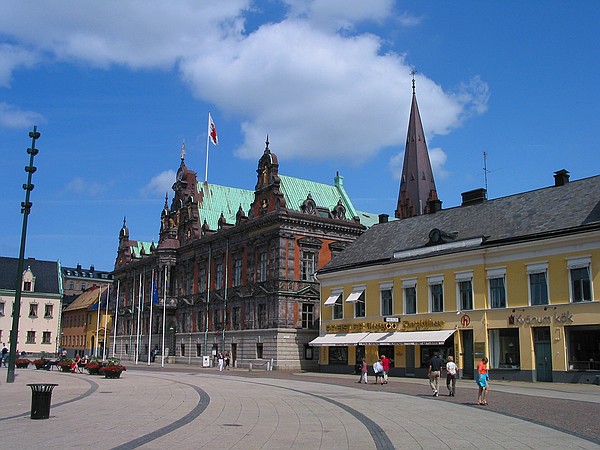
We arrive in Lubeck and find signs for “Scandinavian Quay”. Sure enough, there is an enormous ship in harbour, a car ferry, with “Travemunde - Malmo” written on the side. We are directed to the ticket office by a gruff woman in the check-in booth, and score the last available cabin. Yay! This saves us a day.
We are aware we have crossed Germany for the second time without actually staying there. We joke, should we be thankful for the autobahns, or annoyed that this big country is always in the way?! For now, we are comfortably ensconced in the biggest passenger ferry we have ever been on.
The next morning, Sweden! Malmo glows in the morning sun. It even looks different to northern Germany, a distinction that is probably fallacious as they all have similar, Hanseatic architecture.
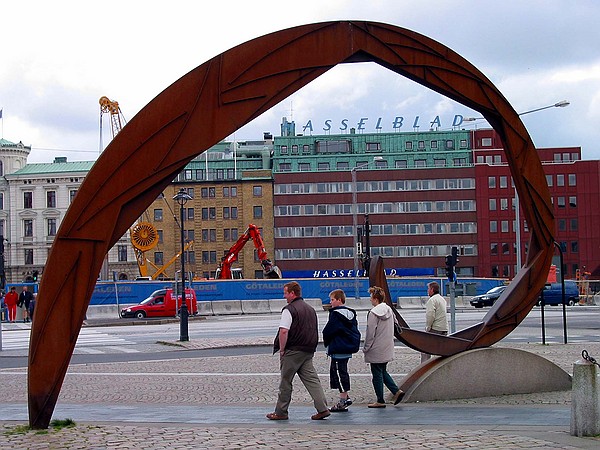
The only drawback with catching up with our friend Niklas is that Fabian hasn’t written down his contact number or address from an earlier email. It is now 7am on a Sunday morning as we drive into Malmo, looking for an Internet Cafe. Well, I’m not even sure there was one, but certainly everything was shut, and it was pretty quiet, as you can imagine!
I have just about given up finding anything open when we chance on the main railway station. Thankfully there is a cafe open, so apart from anything we can get something to eat. But more importantly, there is a modern phone with a small display and keyboard - an Internet phone! Thanks to Swedish telecom we are able to access our email and call Niklas. We are amazed and pleased. Niklas, meanwhile, gallantly drives in to pick us up.
Sweden
It’s wonderful to see him and little Julia after all this time, and very generous of Niklas and Suzanne to put us up on one of their visits to Sweden. We follow him back to their house and greet Suzanne and baby Jonathon.
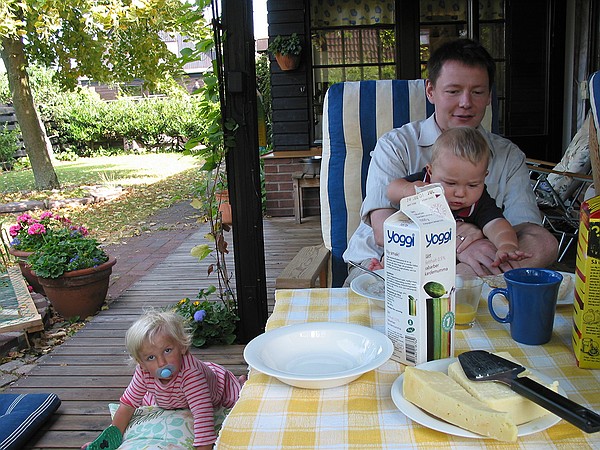
We spend a very pleasant day in their company, starting most importantly with breakfast! We have a fantastic spread of breads, cheeses, hams, muesli and yoghurt. I am most interested to see the Swedes have yoghurt in milk cartons, ie pourable yoghurt. And the flavour is rhubarb and cardamom! Muesli with this yoghurt is delicious.
I comment on the similarity of the houses in the suburb. Almost every house seems to be built to the same plan, with only minor differences in paint colour, etc. Suzanne explains that in the Swedish social democracy, lots of suburbs with almost identical housing was built in the mid seventies. If they are like hers, they are very comfortable and spacious, but lack the hotch-poctch effect I know from the UK or Australia.
It’s my first introduction to a politcal ideology affecting architecture, and middle class architecture at that. (Excluding post-WW2 architecture, which had to be put up in a hurry and tends not to have very well off inhabitants in them now!).
After digesting the fantastic breakfast we potter around Malmo, looking at the charming buildings and cobbled streets. There are lots of people out enjoying the sunshine. Later, we head to Lund, Miklas’s old stomping ground. He is able to tell us literally who was who during the Internet craze in Lund. There is a university in Lund, even though it seems to me a relatively small town. Niklas says this kind of thing supports a high tech industry in the area. It is so different to Australia, where the majority of people and resources are in capital cities.
Niklas also describes the “folk school”, which means a school accessible to all people, something that I later read was first piloted in Denmark and was firmly adopted in all the other Scandinavian countries. This school is a place for lifelong learning, and you could get grants from the state to support your learning. It’s the very egalitarian idea of education being open to all, without necessarily having entrance requirements.
According to Nik his youthful musical experience was assisted by the folk school, and the grant helped buy the instruments. The Scandinavian countries certainly seem to put their money where their mouth is regarding equality and democracy. But I have heard Scandinavians who are not so enamoured with the government involvement in private life, claiming it reduces risk taking, for example.
After this lovely stopover, the next day we depart for the Swedish town of Gothenborg, a few hundred kilometres up the picturesque west coast. Despite being encouraged by Nik and Suzanne to visit Stockholm, it just doesn’t fit in our schedule. We only have 10 days to reach Amsterdam and return the car. That time seeemed plenty in London, when we talked about reaching the Lofoten Islands, in Norway - probably a thousand kilometres away! But now it seems barely enough to get to Trondheim, only halfway. Regretfully we pass a glance at the Stockholm turnoff as we head up the west coast of Sweden. Next time!
Unfortunately, the traditional Swedish summer rain has set in, which means we can barely see the rolling golden fields next to us, as we plough through the pouring rain. Stopping for lunch in Halmstad, we search for a place to eat that isn’t full of people already seeking shelter from the rain. We choose a pizzeria that has well covered outdoor seating. As we are waiting for a table, we see the proprieter bringing out rugs for the patrons sitting outdoors! I am impressed by this attitude - it is July, and summer, therefore one eats outside!
The next day we stay in Gothenburg, another extremely pleasant, not too big Swedish city. I am struck by how liveable these relatively small cities seem. They don’t seem cut off from the metropolis at all (of course, these cities aren’t far from Copenhagen!) The old squares are nicely looked after, covered in cafes, and lots of bookshops and nice things to buy. I think it would be very comfortable to live in most Swedish cities.
In the afternoon we visit the well known Gothenburg Maritime Museum, and get a guided tour in English of a coastal patrol boat. Good grief, I cannot imagine living and working on one of those things. Most crew had only a bunk bed to sleep in, no actual cabin at all, with little natural light as it was under the waterline. There seemed to be no place to eat or gather apart from this same sleeping space.
The officer’s cabins were high enough to have a tiny porthole, but even so they didn’t have much more space than a bunk bed. Yet this post-WW2 boat turned out to be far too big for coast defence, and now they live and work in things half the size!
But worse was to come when we were taken through the submarine next door. There was literally only one path through the submarine - from one end to the other. The place stank of fuel. I climbed down directly into the crew area - a bunch of bunk beds that were right next to the missiles! How could people sleep when right next to them someone is priming a missile…
As for movies where people run through submarines, forget it. There were two airlocks that were low and round and had to be crawled through. They had removed the doors to make it easier to move around, but anyone who was claustrophobic would not survive!
Interestingly the girl who was guiding us told us proudly that Sweden hadn’t been involved in a war for more than a hundred years. They had been neutral in WW2. She didn’t mention the German troops that were transported all over the country, accessing the battle fields in Norway and Denmark, or that it was pure luck Hitler didn’t need to invade Sweden to prevent the British coming, as he did with Norway and Denmark. Sweden was certainly lucky not to be too involved, but they now maintain an active military, including national service, so maybe they don’t remember such “neutrality” so fondly.
Coffee By this time we have noticed the Swedish coffee. It is very good, much better than in say Switzerland, but quite different to Italian or French. Coffee seems to reach a high point in the south and north of Europe, and a bit of a, how can I say, low point in the middle! Anyway, coffee in Scandinavia looks like American coffee, it is percolated, and kept warm in a jug. When we ask for coffee in a Swedish coffee shop, the lady points to the coffee pot, cups and milk, and says help yourself, it’s a bottomless cup.
I also notice the lovely wooden houses look like American timber houses… I have to adjust my thinking, and realise the influence of Scandinavian immigrants on American life. It’s actually Scandinavian coffee that the Americans adopted! And the Scandinavian word for hello is hej, pronounced just like the Californian “hey!”. Too much of a coincidence?
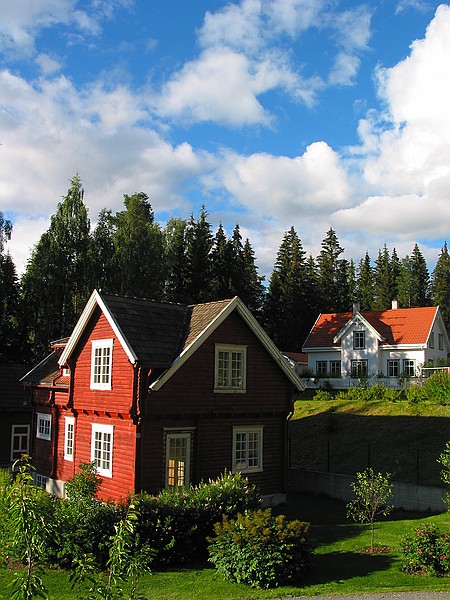
After our night in Gothenburg we head further up the coast, aiming for Norway. The countryside is beautiful - undulating, with little farmhouses dotted everywhere. Not painted as I recall from Norway. One of the challenges in visiting Scandinavia is appreciating the enormous similarities AND the differences between the three main countries. This difference in architecture is immediately obvious the second we drive over the border - the land becomes very hilly, and the charming painted houses start. I guess Sweden kept all the good farmland, in drawing up the border hundreds of years ago! But Norway now gets all the dramatic scenery.
Norway As we cross the border, I tell Fabian a story a Swedish exchange student told me years ago - how the Swedes were the only ones in mainland Europe to drive on the left, like the English. This led to untold accidents on land borders with Norway and Finland. I don’t think there were road structures to help people change sides, just a sign probably! So Sweden decided that it would get everyone to change sides - and it was executed in a single night. Apparently there were no accidents at all! On that day, at least, probably accidents rose again to their usual level after that :-).

We stop in Frederikstad for lunch, a little fortress town that used to repel the Swedes and Danes. The old town is in very good shape, literally pristine. We eat, and are reminded of the sad fact in Norway that often, inexpensive, quick food is junk food. The place said Cafe, but in fact, served pretty much fast food - chicken with chips, sausage with chips. And it’s not cheap. Sweden, with its current weak currency, is a real bargain. A plate of food at a cafe is about 5 euros, compared to around 8-10 euros in Norway. So any readers who are interested in the area, I can highly recommend a weekend trip to Gothenburg or Stockholm!
That night we end up in Lillehammer, pretty exhausted after the long drive. Fabian starts talking about extending our lease on the car, because we aren’t going to be able to maintain this pace. To our eternal fortune, he succeeds so we celebrate by spending the day in Lillehammer.
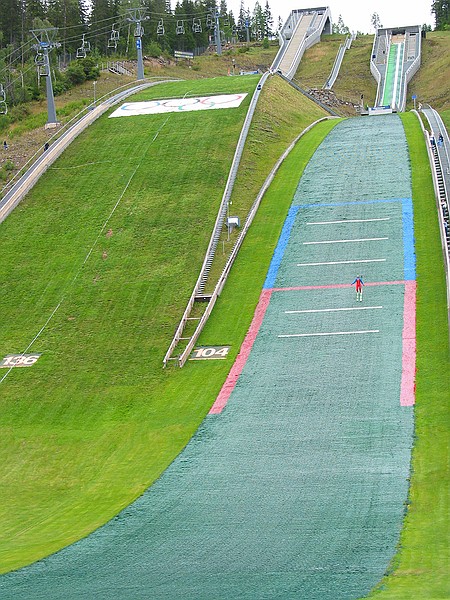
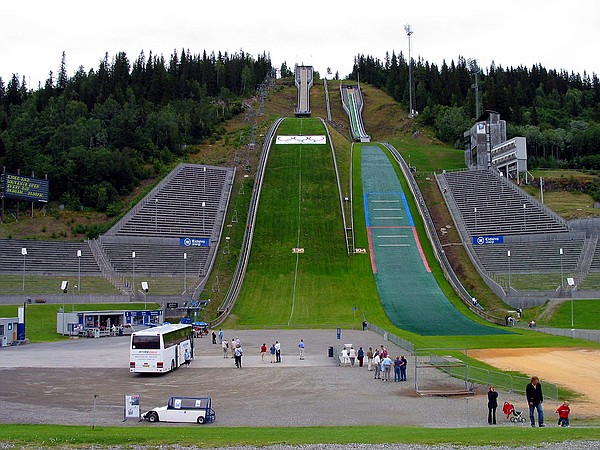
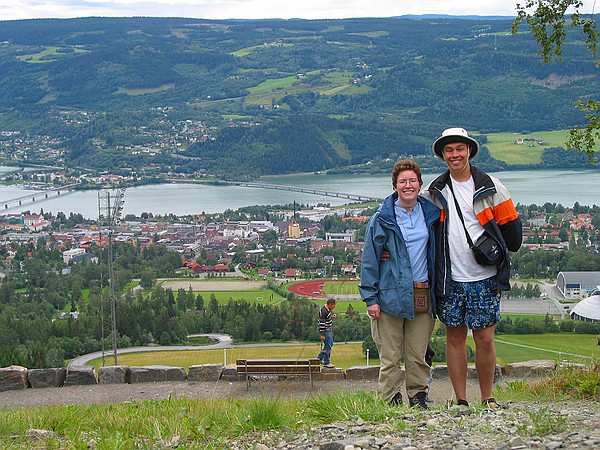
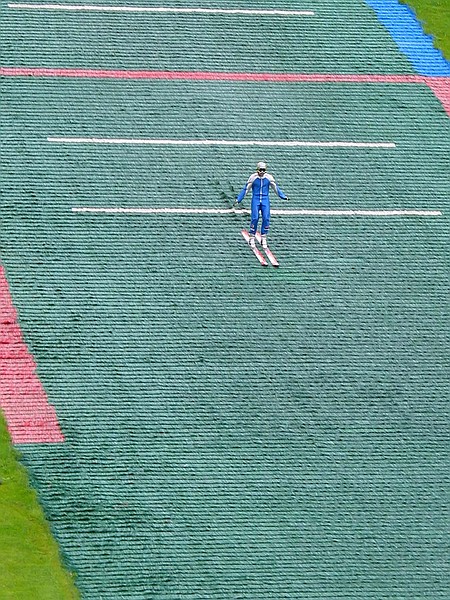
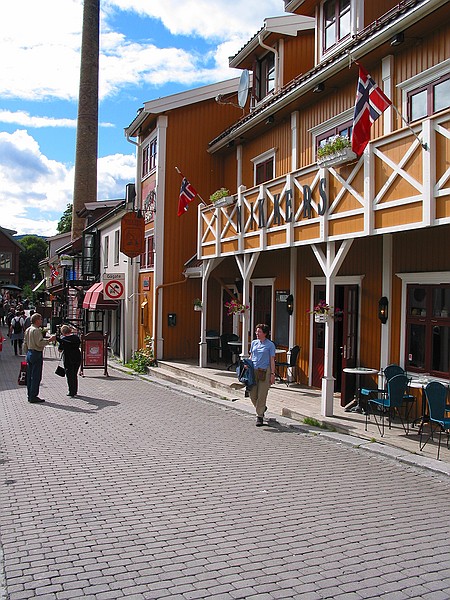
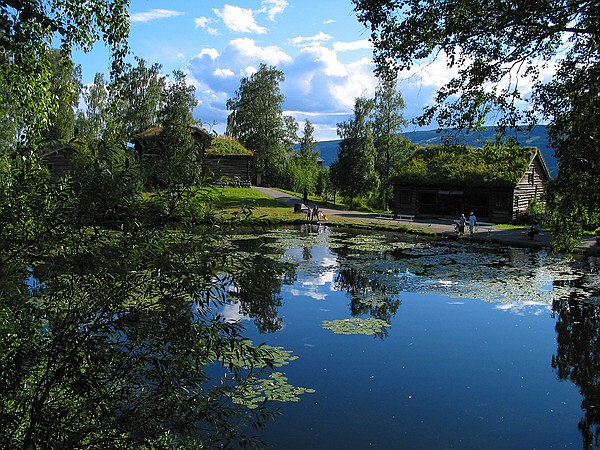
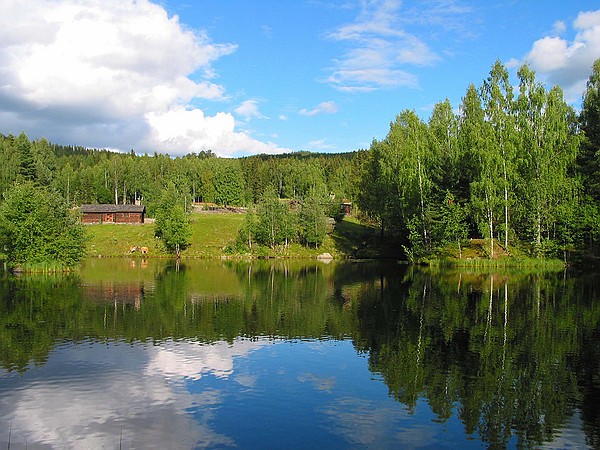
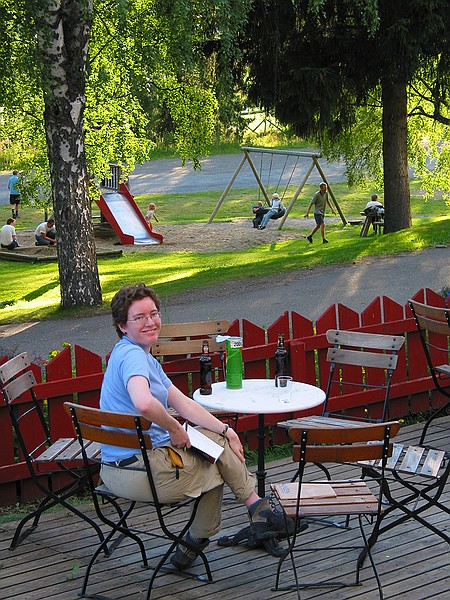
Our Norweigan friends later asked in amazement what we did for a day, in this small town, a winter resort where we came skiing in December. That in fact provides most of the amusement! The weather is finally starting to clear, and as you can see from the photos, the clear light made Lillehammer a particularly fetching place. We ogled at sports fields that had been covered in a foot of snow last time we were here, frozen rivers where now bathers swam. It was bizarre!
The best bit however was visiting the Folk museum, Maihaugen. I knew this was supposed to be good, but wasn’t sure why. Turns out Norway does extremely good museums! It has museusm on folk culture, glaciers, road building, etc. I speculate that it’s to compensate for the long winters, but our friends in Trondheim dismiss this as they don’t visit museums much.
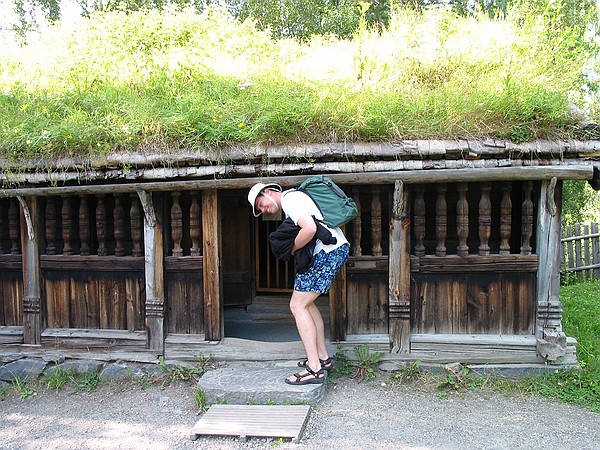
Anyway for a country that doesn’t boast hundreds of Renaissance painters, or musicians (although it has a some well respected writers and artists) Norway has found reason to concentrate on folk traditions. This includes things like buildings. Maihaugen had an excellent indoor exhibition on Norweigan history for the last couple of thousand years, and outside lots of buildings that had been “rescued” from being bulldozed around the country. Thus a young Norweigan can see how their ancestors lived, in farms mostly but there are also coastal houses.
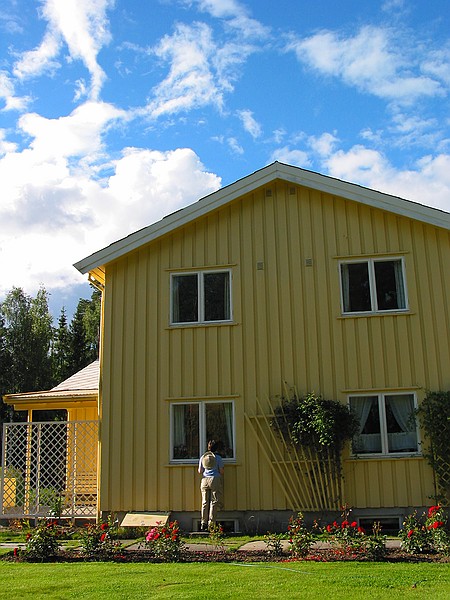
These museums are called skansens and are actually popular all over Europe in smaller nations (eg Poland) where a large part of history is in the daily life of the people, rather than with kings and queens. For us, they are cool old buildings, with English explanations, on a beautiful sunny day. And even some modern buildings! It is fascinating to see a modernist 1930’s building with a low roof, just like they built in Perth! It’s like a history of architecture, only in front of you, not in a book.
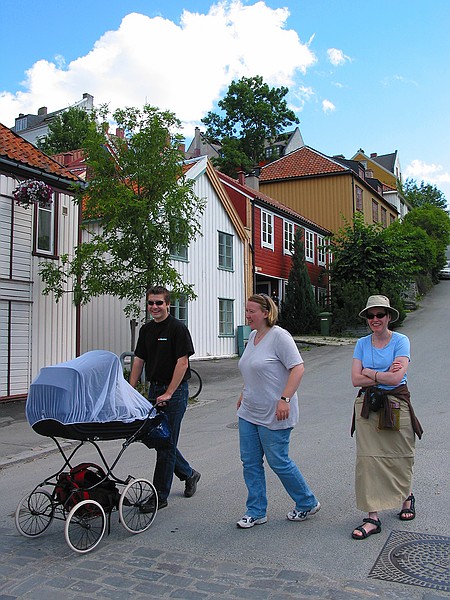
The next day we head off refreshed after our day in Lillehammer to Trondheim, where we are going to visit an old friend of mine, Mona and her partner Leiv. Mona was an exchange student to my high school, however long ago that was! and this will be the second time I have visited her. The first was when we were both students, now she is a career woman with a new baby. Seems like lots of my friends are having babies, hmm maybe there is a message there!
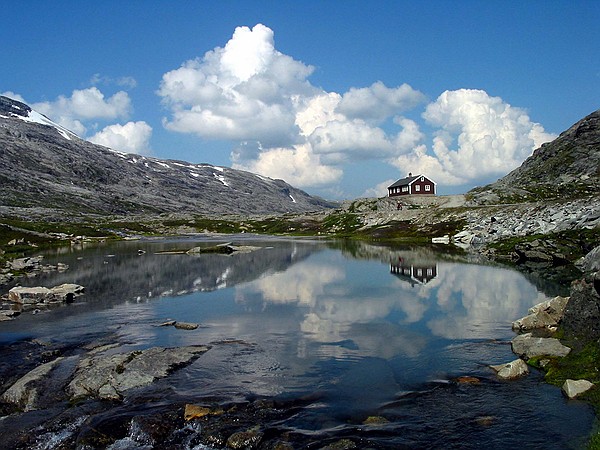
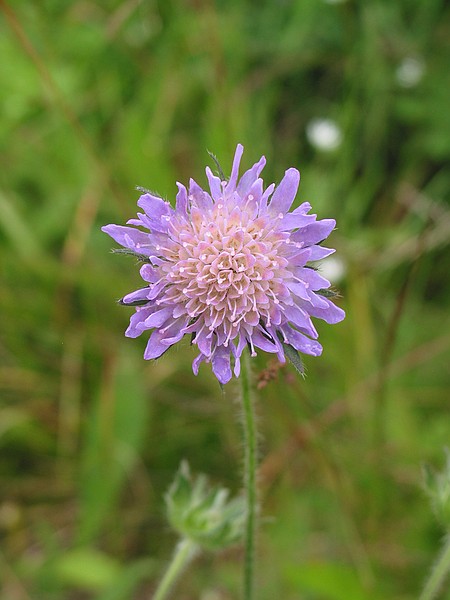
This day ends up being a highlight, as we set off, in the glorious sunshine, remarking yet again about what a beautiful country Norway is. The drive takes us over the mountains, in a careful winding route. We stop about midway for a picnic lunch, very high up. And there they are - the alpine flowers! The entire area next to our benches (thoughtfully provided by the government, makes driving in Norway a pleasure) is a hedge of alpine flowers, literally dozens of different types, all small and delicate. There are pink, yellow, blue, purple, white - every colour, every shape. Bees are everywhere, busily making the best of the short summer. I take dozens of close up photos of the flowers, I see only one made the cut to this page. Oh well, you’ll have to imagine.
Trondheim After arriving once again our friends pick us up, and we are soon ensconced in Mona and Leiv’s comfortable house in Trondheim. It is amazing to see them after all this time, and of course to see their new baby, Tobias. He is very small, and I think, only slowly adjusting to life on the outside! His favourite location is to be carried by Mum or Dad. I see I have to adjust my expectations - you carry it for nine months, then for a a bit more!! I suppose at least Dad can do some of the carrying at this stage. It was a very special time to visit, actually, because he literally seemed to be growing and changing in front of our eyes. I start to understand some of the cliches - “they change so fast at that age!”. Well, they do.
Mona and Leiv feed us an entirely Norweigan meal of reindeer stew followed by cloudberries with cream. Leiv even tries out his cloudberry liqueur on us! It’s all pretty good and we enjoy being in a home, so rare when traveling. They regale us with stories of their time as students in the Czech Republic, not all good. It was about five years ago, but they felt keenly the poverty of their surroundings, and the difference in resources between their Norweigan university and the Czech counterpart. It filled me with some foreboding about Eastern Europe - hopefully things have improved since then?
We also comment how Sweden seems more affordable than Norway, and Leiv tells us how Norway has always been the “little brother” of Denmark, then Sweden. I remember seeing in the museum in Lillehammer that the black death in 1348 killed almost a half of the Norweigan population. The weakened nation was easy prey for neighbouring kingdoms, and Norway was soon annexed by Denmark in a “union”. Like all such unions Norweigan culture and language was oppressed. The one good thing was the development of a middle class, educated, who were a prime force in moving to independence.
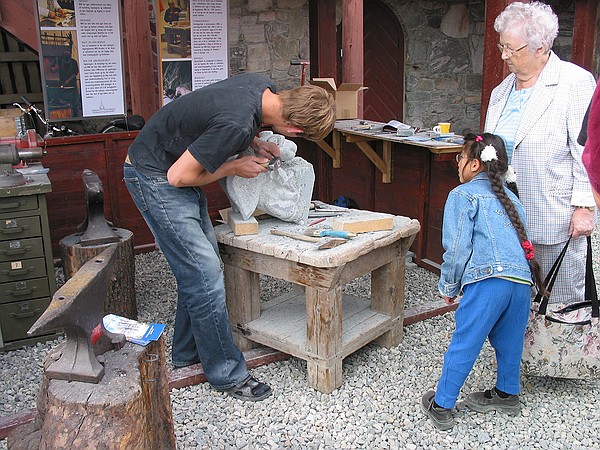
But the next step was a union with Sweden, for about a hundred years, and only in the beginning of the twentieth century did Norway become totally independent. But then they found the oil, and the gas, and that has helped Norway “steam” ahead. Amazing - what is worth something in one century is eclipsed by the discoveries of the new century!
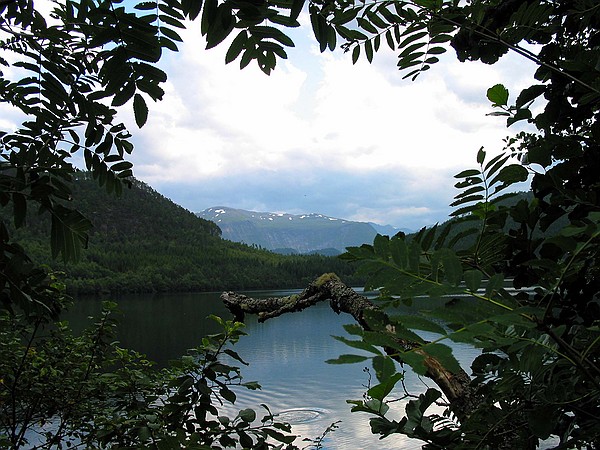
The next day we start with a fantastic breakfast - different from but as good as the Swedish version. There is fresh bread, Norweigan brown cheese, cloudberry jam, good coffee… what a start to the day!
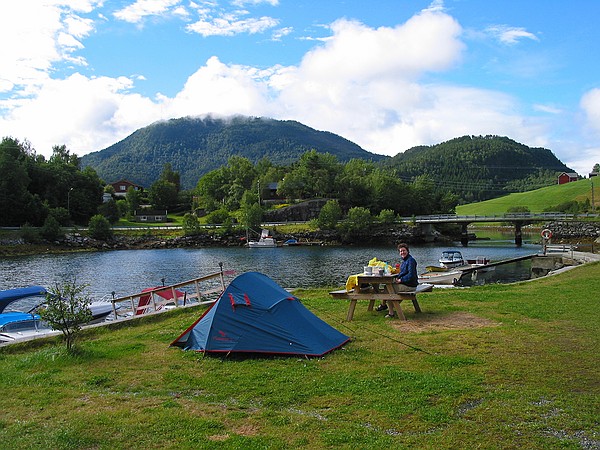
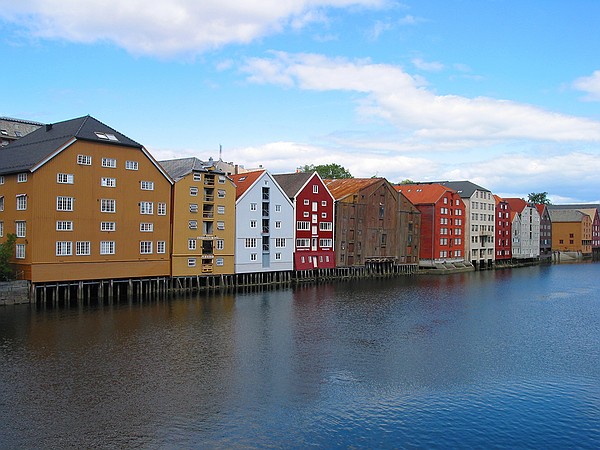
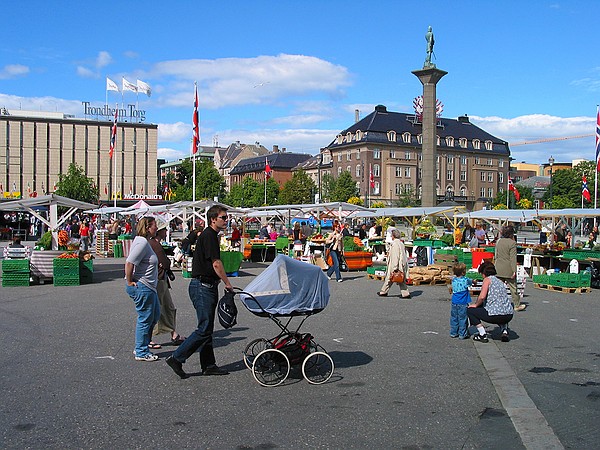
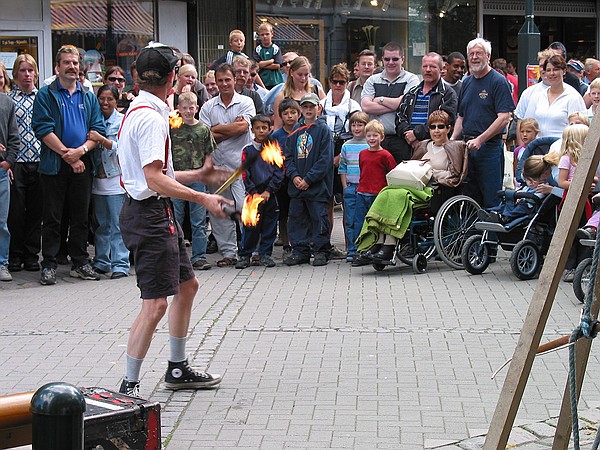
As the good weather is still here we later potter into town. Although I visited Trondheim many years ago, it was winter, and I don’t recognise the town at all. The town we see on this sunny day is (like all Scandinavian towns??) beautiful, with lovely restored harbour buildings and warehouses, lively squares, and bustling cafes. There are street performers and a medieval market behind the church. Ahh, Scandinavia in summer - nothing like it.
Fjords! The next day we say our goodbyes to our generous hosts and head off to the fjords. It is another great day - and this is by no means a given! Our previous summer trip, in August, had one really clear day, out of five. This string of good days is fantastic.
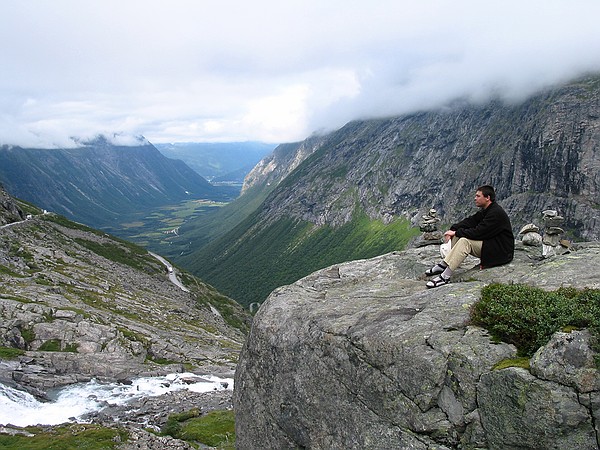
The views are glorious as we drive out
around the fjords. As we round the first of the curving mountains,
we see something Mona had talked about - “a factory at the top of every fjord!”.
That is where the electricity is, apparently. But this factory, despite
large silos, is completely dwarfed by the fjord around it, and painted
in pastel colours to boot. Not too bad, I would think, and knowing Norway
probably doesn’t pollute much either.
But that’s the only factory we see, as we continue around the fjords to our first campsite. It is a tiny little settlement and we camp only a few meters from the water. It is full of Dutch and German campers, who look, as usual, like they have set up for a month or so. Fishing seems to be the main pursuit, and I meet a young Dutch man in the kitchen who is gutting an enormous quantity of herring. Turns out he comes up here once a year, catches hundreds of herring, and stuffs them all into barrels with kilos of salt. Not just the scenery then!
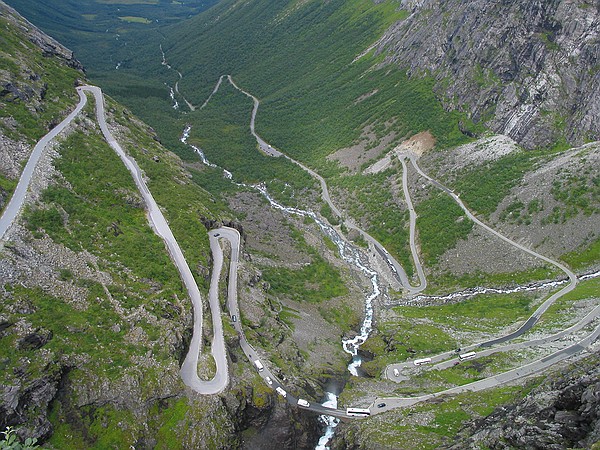
After dinner a huge wind comes up out of nowhere. “Mountain weather!” sniffs the Dutch man. It is still light as we scurry around making sure the tent flies are down, and clean up. There is no rain fortunately, just this amazing wind. For the first time I feel grateful to our little tent, instead of grimacing at its small size (more on the fate of the tent in future stories…!).
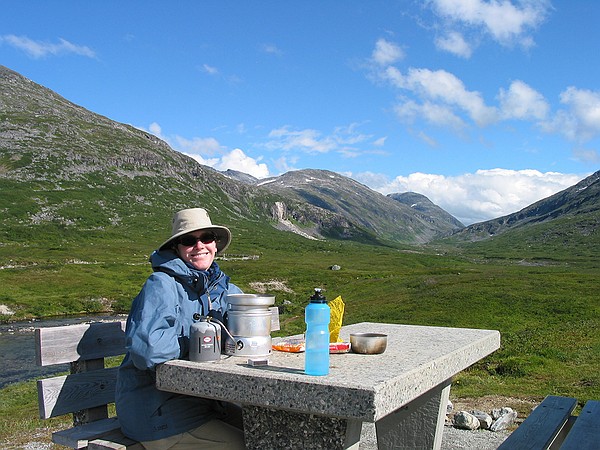
The light is astonishing. We have noticed it since Gothenburg, where we also camped. The sun seems to go down around 10pm, but a twilight continues till at least 11pm. In fact it’s hard to tell when it gets dark, as we go to bed in the light and wake up in the light.
I am finding I am not sleeping so well however! We try to use our airline eye-covers to get better sleep, with mixed success. In Gothenburg it didn’t seem to bother the Swedes, their children stayed up literally till the light faded. I guess when days are so short at other times of the year, it is almost a celebration during the summer. Even in homes, no-one has thick curtains, preferring to spend a couple of months with less sleep.
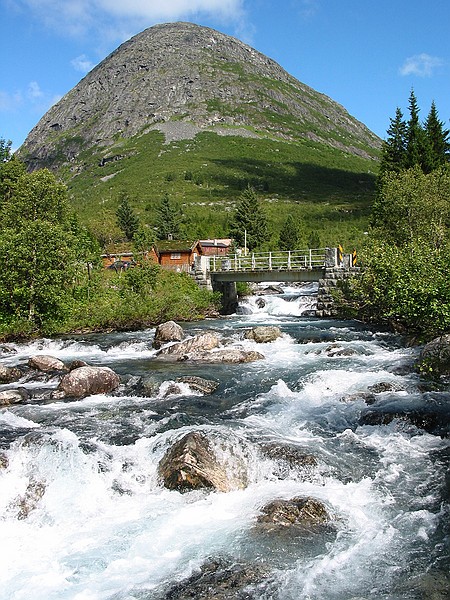
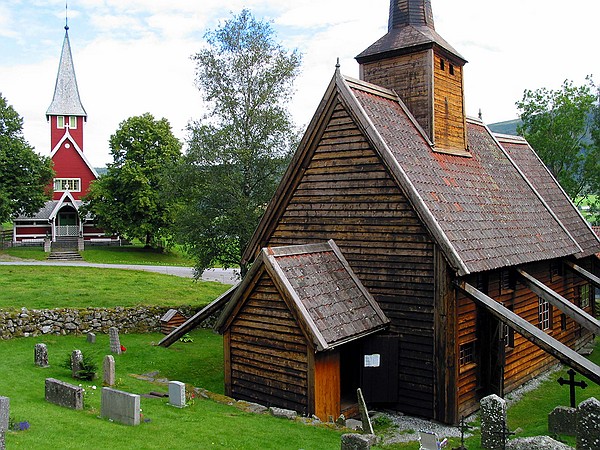
The next day we leave our idyllic spot, and check out the nearby Rodven stave church. Stave churches are famous in Norway, as they are very old but used different building tactics to the normal houses, so could be bigger. Most of them have been renovated over the centuries, to be more Protestant, with pews and a floor, for example. The original ones apparently were enclosures over the ground, no windows, thick incense, and a service in Latin! Scholars believe the services weren’t very long, though…
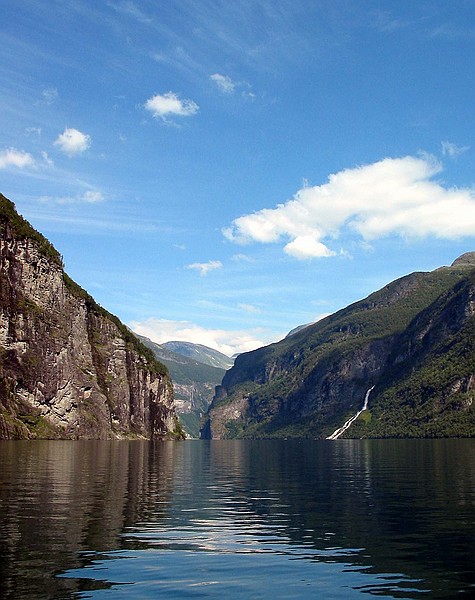
The next part of our way involves going over an abrupt mountain range, which is famous for being the “Troll’s way” - the Trollstigen pass. The guidebook we have gives a frankly terrifying description of one lane roads, inching down, etc. But when we get there is amazing, full of tour coaches, and everyone going up so slowly there is no possibility of accidents.
The road zig zags up over the pass, descending on the other side at a much slower pace. We gawp at the engineering required to put a road over this mountain. It was originally used by farmers in times gone by, and you can still hike the original path. According to information signs on the way they used to take their animals to market this way, and lost quite a few at the river crossing. The rushing water is now crossed by a sturdy bridge.
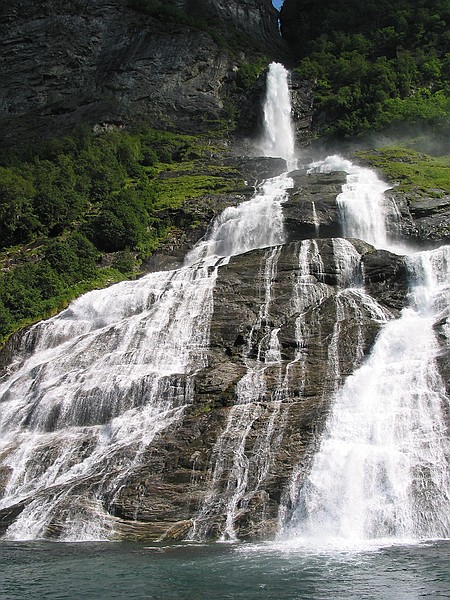
Apart from the view, the best bit was after coming up in clouds, as we hit the top and went over the clouds lifted, and we were bathed in sunshine. Mountains in sunshine are magical places, all green meadows, zipping white clouds and blue sky. We stopped, exhilarated, wandered around and poked at pockets of snow. Reluctantly we hopped back into the car and gradually descended all the way down to the next car ferry that would take us to Geiranger.
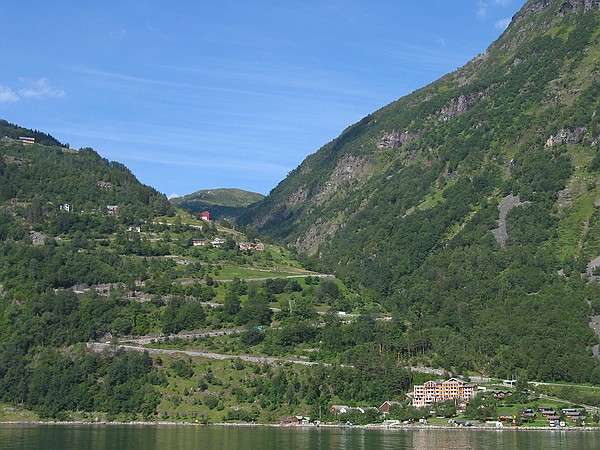
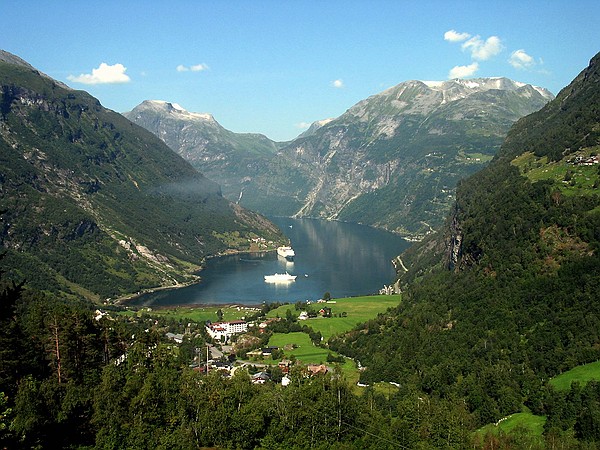
I was very glad the weather had improved as we pulled into a fortuitous car park that happened to overlook Geiranger Fjord. We knew it had to be full of tour buses for something!! The view was magnificent.
Below us was the narrow gash that is Geiranger, famous for being a dramatically narrow fjord, with an enormous cruise liner in it. The amazing thing about fjords is they are so deep! Some are as deep as the mountains are high, which is pretty damn deep. So this outsized ship just sat there, literally only tens of metres from where the mountains spout up from the water. It was incredible.
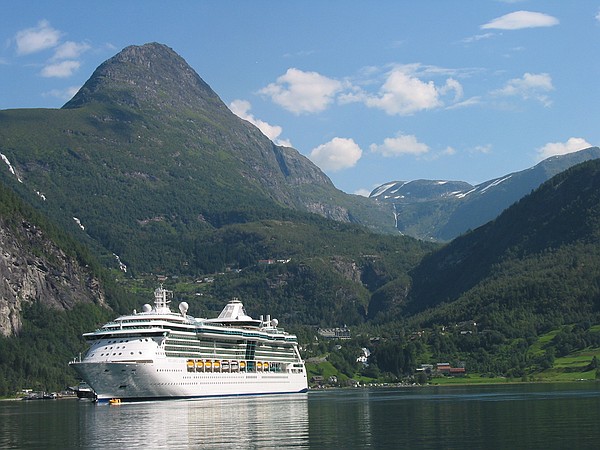
Descending in the fjord down the switchback road, we spot a sign - “Rooms” - and get probably our best deal in Norway. For about 40 euros we get a room, bathroom, kitchen and dining! This is a “private room” as often found in Europe, and it was comfortable and had a great view as well. This became our base for the next day as well, as we decided to stay in the fjord country, where we were confident the weather would be good. And being able to make food is a major saving in Norwary where restaurants are very expensive.
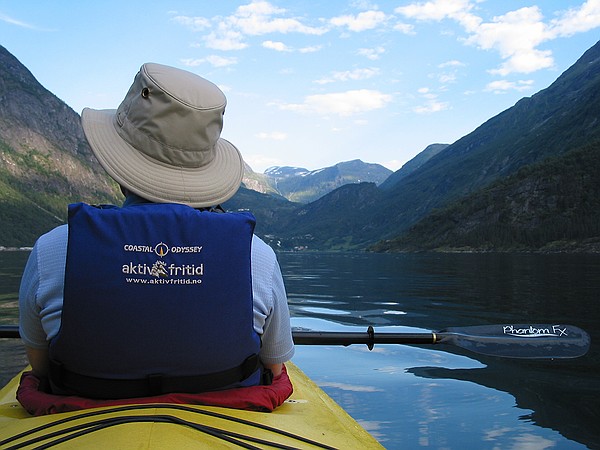
The good weather continues, and the next day we take a cruise down the fjord, and in the afternoon go kayaking. This is great, the first time we have been kayaking, and I would thoroughly recommend it over canoeing. Sea kayaks seem to require much less effort to keep them going than canoes. The owner has a glossy brochure listing sea kayak tours in the Lofoten Islands, British Columbia, Mexico… ahhh that would be nice.
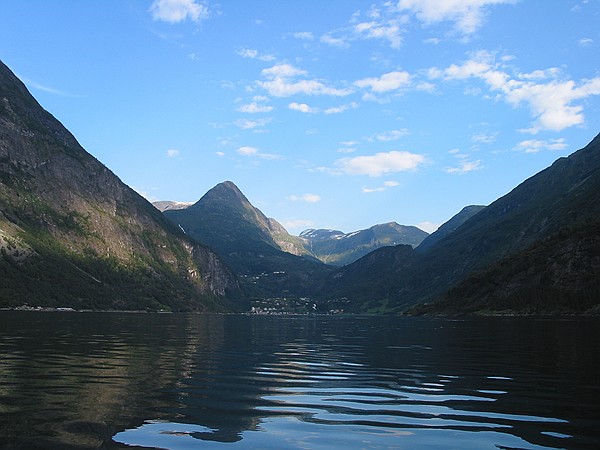
Finally comes time to plan our return to Oslo. This means leaving the coastal fjords, and driving over the central mountain range that goes virtualy the entire length of Norway. As we ascend the mountain the next morning, it seems impossible that we could stop too often, or take too many photos, as the views just get better and better. Eventually we pass out of sight of the beautiful fjord, and sigh with relief. We’ll do some miles now! But it is not to be - we catch sight of a sign pointing up a dirt road: “Dalsnibben - 50 kroner” (about 6 euros). What on earth is at the top of a dirt road that is worth charging for?
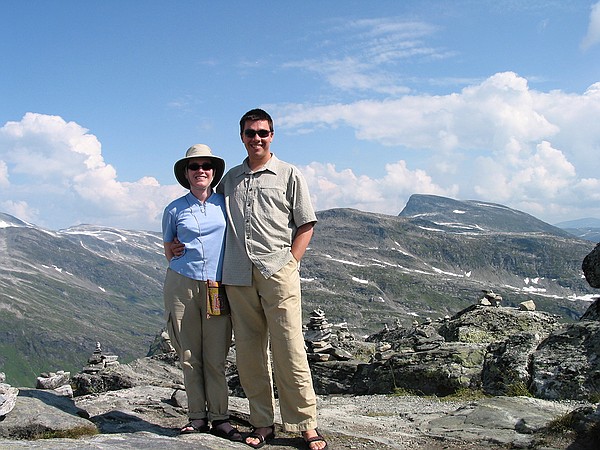
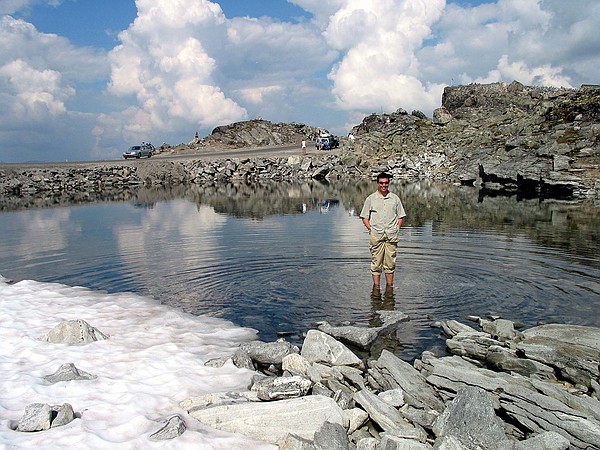
Obviously we decided to find out. The road is exciting as there are no barriers! The top is a peak in the mountains, with fantastic views over Geiranger and the mountains behind us. There is lots of snow up there too, and Fabian bravely goes wading in the glacial pool! Not me.

The day is getting on as we move on, driving almost on the flat now as we hurtle down mountain valleys. We debate investigating a nice walk Mona and Leiv talked about, a mountain walk with dramatic views down to two glacial lakes, one on each side! But we have spent our time already, at the fjord and the mountaintop, and it turns out to be a good choice as the weather becomes unreliable as we head inland.
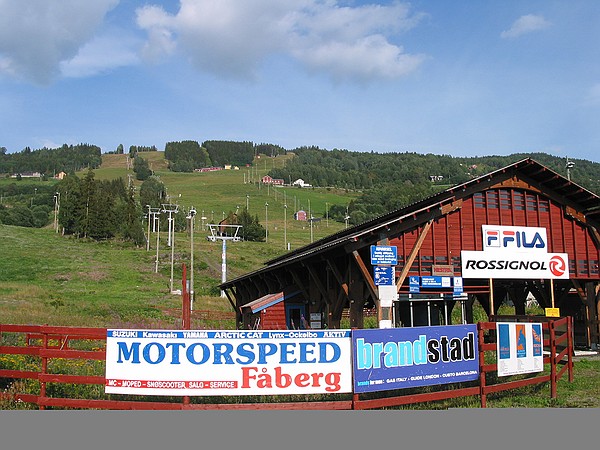
We stop for the night at Hunderfossen, which is just across the river from the Hafjell ski resort. For some reason - a morbid interest? - we go over to the ski resort entrance. It is deserted, signs flapping in the wind, full of grass and weeds. It is so bizarre. Some resorts in Switzerland for example still operate in summer, with the chair lifts taking you up to summer hiking trails, but not this one. It was hard to equate with the bustle of the resort we saw only six months ago.
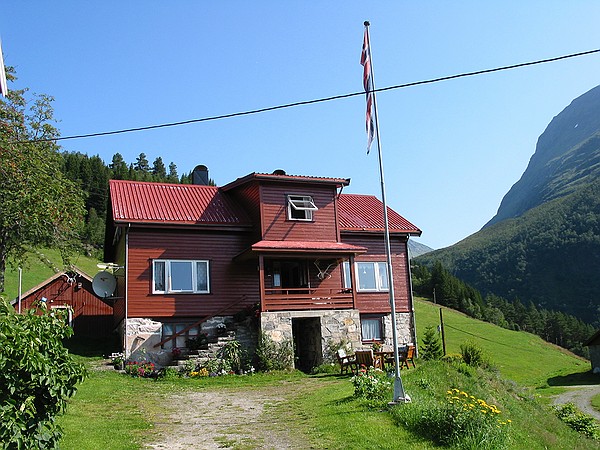
Our last day in Norway we head down to Oslo as fast as we can. We have already booked an overnight ferry to take us to Copenhagen. As it turns out, we have just enough time to visit the Folk museum in Oslo. This was similar to Maihaugen but bigger, and we score a guided tour.
The young lady leading the tour spoke flawless English and is palpably proud of her country, dismissing Swedish attempts to call Norweigan folk art their own, for example. The most interesting old house was an open hearth house, about 4oo years old. Boy, life in one of these would have been hard. The fire is just in the middle of the room, with no chimney. The smoke vents out of a hole at the top of the roof. The doors are always open to draw in fresh air (even when freezing) to displace the smoke. No wonder our ancestors didn’t live long if they lived in smoke all day long.
I really enjoy the folk museums, we both do. It is satisfying to visit a country and actually see some of its traditions and history. I guess an alternative would have been to visit the main art gallery in Oslo, for example - but we would have ended up seeing a European art collection. Instead, we get to see how Norweigans lived, the clothes they wore, the traditions they engaged in. I have always ridiculed Bill Bryson for visiting every local crackpot museum when he travels, and ignoring what seem to be the “bigger” ones. But maybe I am starting to come around.
On the ferry at last, we puff out of Oslo fjord, hardly 200 metres from the coast the whole way to Denmark. It’s a glorious evening and the deck of the boat is full of young people sitting in the sun with a beer. The older folk seem to be all downstairs in one of the numerous bars. This is definitely the biggest ferry I have ever been on, how long can this keep happening?!
Copenhagen The good weather doesn’t last though, it seems like it’s determined to rain in Denmark and Sweden! Once there we opt for a “private room”, arranged by the tourist bureau. Copenhagen actually supports a bureau for budget travellers, called Use it, and they have a a free map/what’s on listing called Playtime. The office was totally free, and very useful! I was impressed at this idea of encouraging budget travellers, only time I’ve seen it so far.
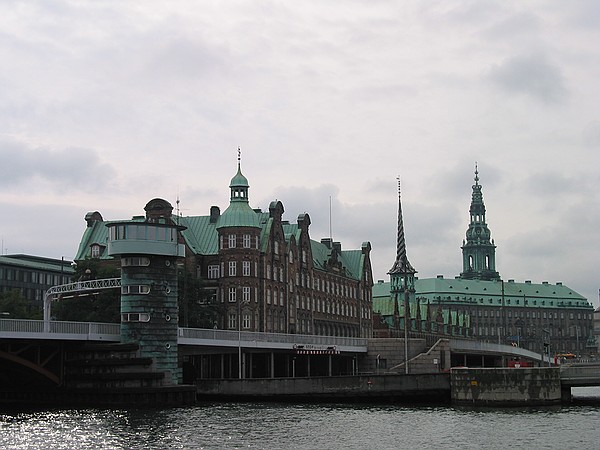
The architecture in Copenhagen is gorgeous, magnificent old buildings, and apparently a great deal of it has been undergoing “urban renewal” in the last decade, by which we are supposed to understand “renovating and tarting up for the new rich”. However, the place we stay in definitely isn’t tarted up - as we slog up four flights of stairs, we find a comfortable bedroom but with a bathroom the size of a cupboard.
But, the location is good, and the couple seem nice. There is only one bedroom so they spend that night on the sofa bed in the lounge. The next night they move out altogether for some other tourists! That was puzzling until he told us he had a yacht down in the harbour. Good way to earn some extra money, I would imagine, and possibly tax free!
Copenhagen grows on us, and we really enjoy it, even though it can’t bring itself to stop raining till our last morning. As a city, I think it would be a great place to live. It’s Scandinavia’s largest city, very cosmopolitan, and like Sweden very interested in modern design and architecture.
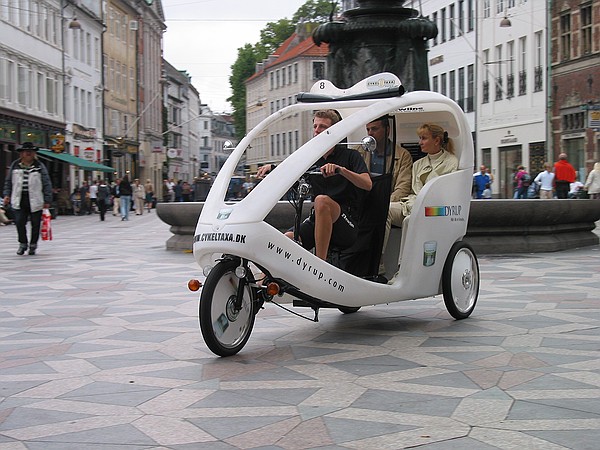
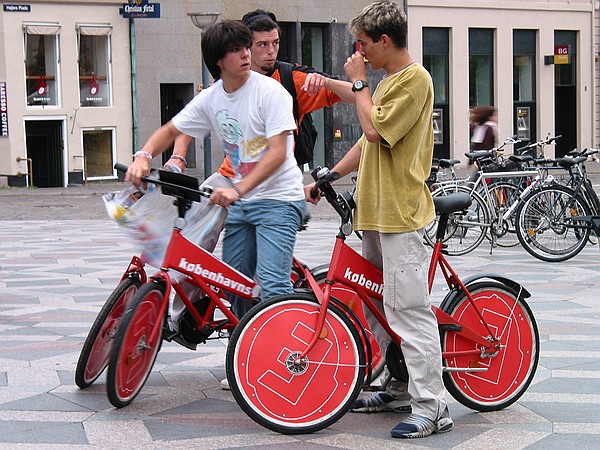
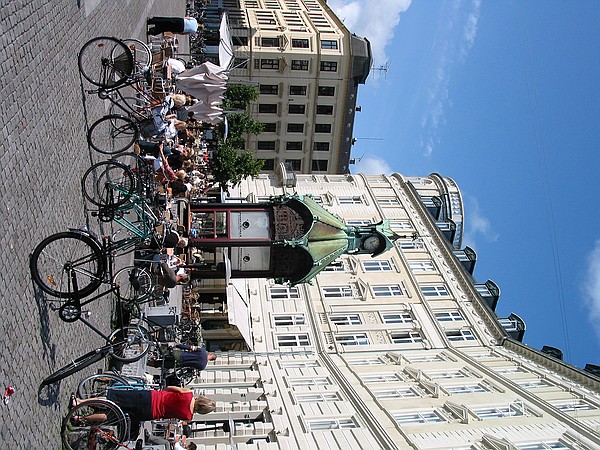
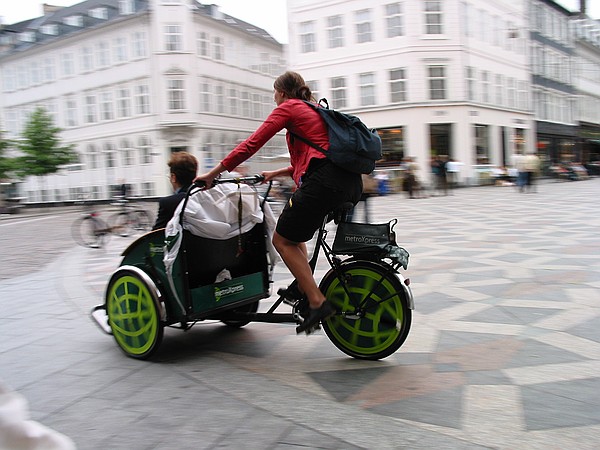
The city fathers have also taken a very modern attitude to transport, and strongly encourage the use of bicycles. It’s the first city I have seen that does this and I am very impressed. I like the bike lanes even more when I ride on them!
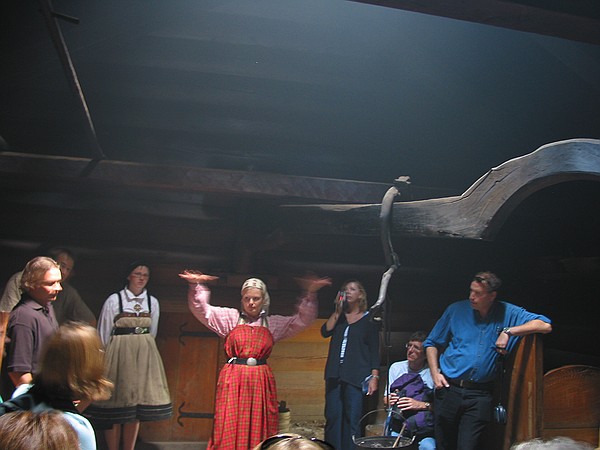
Admittedly, Copenhagen is a bit blessed, because it has lots of wide, straight boulevards. Basically the approach has been to create a third bit of street - after the car bit, and the pedestrian bit, in the middle they have a bike lane. It is bitumen, pleasant to ride on, and separated from the footpath and the road by a kerb on both sides.
The great thing about this is you can still walk around as a pedestrian quite comfortably, without being in danger of being run down by bicycles. Also it means you don’t need separate maps or signs for cyclists to get around, as they are part of the road traffic.
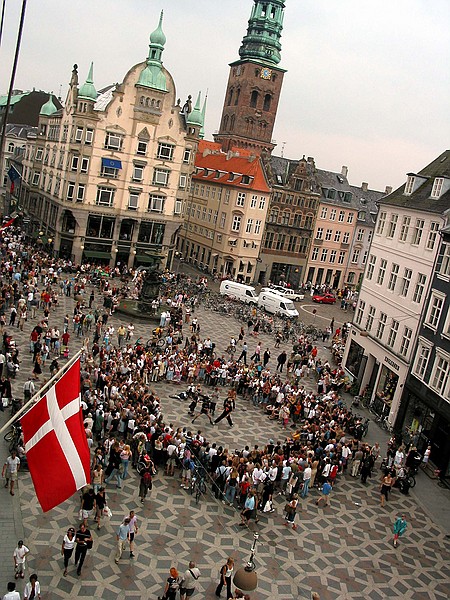
I think of London, and its twisty, squishy little roads, and sigh for knowing it could never be like this. My home town of Perth could come close though, as we have the space (mostly) to make cycle lanes work. And they do work - even in the rain it was clear lots of Copenhageners cycled to work, to the shops, out to coffee. There were bikes parked everywhere - mostly in squares - another thing London lacks.
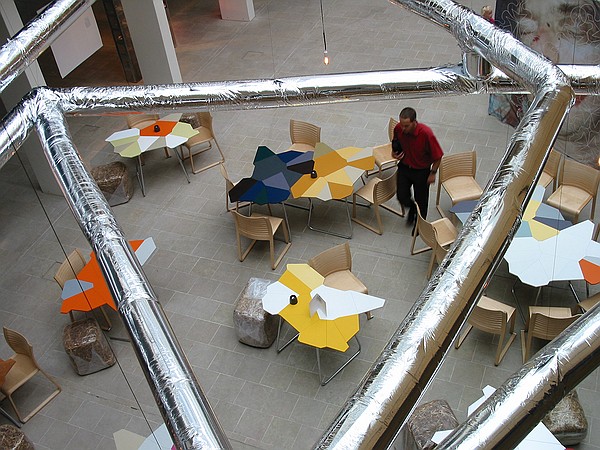
So, enough on bikes, we also like Danish design. We spend a happy hour in one of the oldest department stores in town, Illums Bolighus, practically drooling over the lights, lamps, carpets, furniture, not to mention oodles and oodles of cool kitchen stuff, all modern, light, a joy to use. I would love to come here and spent thousands and thousands on home stuff. However, at Danish prices, we restrict ourselves to some smaller souvenirs.
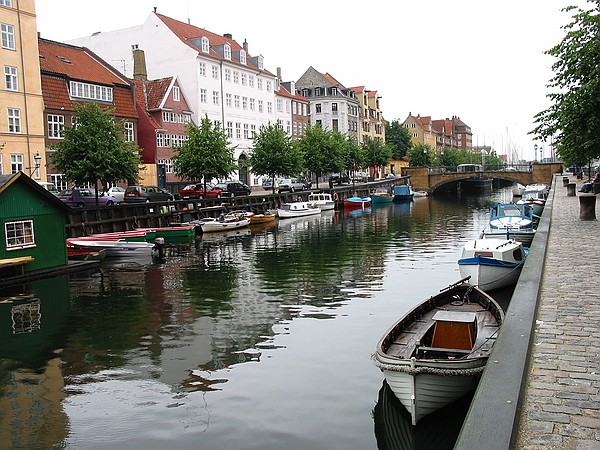
We also visit the Danish Design Centre, which is quite interesting, I say quite, because it isn’t exactly a museum of design, but does have lots of cool stuff in it, but I feel it could have had a lot more. The most interesting area is an exhibition where dozens of Japanese designers have been asked to redesign commonplace things, like cigarette packets, cockroach catchers, all of paper. Their ideas are most interesting and almost always an improvement on the current design! It strikes me that so much of what surrounds is is not there for any good reason, but just history. Inertia.
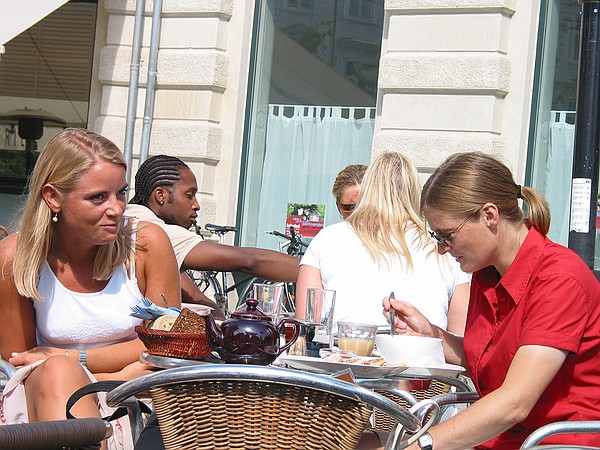
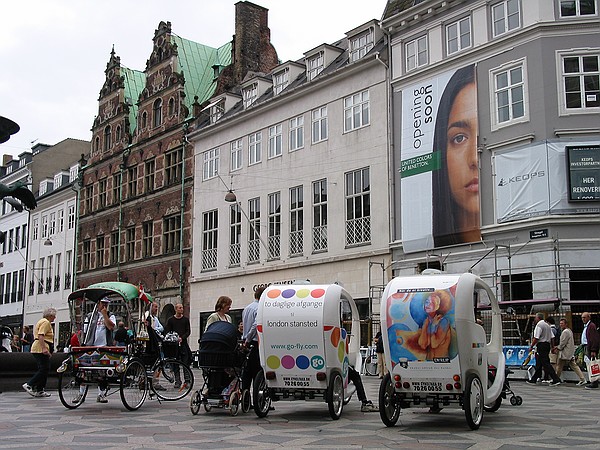
We chance on an excellent breakfast cafe, in a square just up the road from our room. “Pussy Galore’s Flying Circus” - thoroughly recommended - with Antipodean waiting staff and a great atmosphere. We like it so much we went there twice! The first day it was raining, and everyone chatted and socialised inside, lit by big windows. Kids crawled around as their fathers smoked and drank coffee. The next day was sunny, and we sat outside in the cobbled square. Beautiful women cycled up, hopped off their bikes and hugged acquantainces. It was fantastic.
Finally it’s time to leave, to head back to Amsterdam and return our car. I think back on what I find so attractive about Scandinavia and the people. Of course, the countries don’t have big populations, so there seems to be lots of open space, lots of nature. And Norway is certainly one of the most beautiful and dramatic countries in Europe (I have seen Switzerland now, so feel safe in saying that!).
But it’s more than physical attributes. It’s also the Scandinavians themselves, who have built modern, dynamic societies, with respect for the past but both eyes turned to the future. A place for the locals. Wealthy, but where people live well and there are opportunities for everyone. A place that invests in public transport, education, the environment. Marx, eat your heart out.
Of course, it does rain a lot.
More Photos