Roman Holiday
What a day! In the morning we met the landlord, got our deposit back, did some final jobs. By lunchtime we were assembling our luggage on the bikes and pushing them out the door. Boy, were they heavy!! We’d only added front panniers since France, but it felt like half a tonne. We took the tube to Liverpool St and bought a ticket for the Stansted express. But when we tried to get on it, we were informed that the express didn’t take bikes, and we would have to take the “stopping service”.
Fine. Fortunately when we travel with bikes we always try to be early, so the extra delay wasn’t fatal. It occurred to me that this is how it would be all through Europe - any trip with a bike is bound to be on the slow service. Good to know in advance.
The train seemed to stop in every hamlet between London and Stansted, but at least we didn’t have to rush. All the rushing had been done earlier in the day, and now our course and times were set!
We arrived and checked in. By the time the nice Go man took our bikes away, there was no time to do anything other than proceed through immigration and board. All our spare time had been used up, and checking in bikes always takes a bit longer. But good planning meant we hadn’t missed our flight, unlike the poor guy next to us at the checkin desk, vainly insisting that he shouldn’t pay the £25 charge (each!) for his family’s missed flight.
Finally, finally, on the plane, we get a chance to relax. Amazing. All the hard work of the last few weeks, culimating in moving out of our flat this morning, is finally over. For the first time in ages the knot of anxiety in my stomach starts to unwind. We might have actually done it! Thought of everything!
The flight is pleasant. It’s with Go and they seem good. They certainly cost about a tenth of a similar fare with British airways. We land at Ciampino airport, a smaller, less used airport only 12 kilometres from Rome. Easy, I think, to cycle into Rome from here.
As usual, everyone has gone by the time we load our bikes up. But unusually this time the entire airport seems to be closing as we wheel them through customs to pump up the tyres. We are watched with interest by the customs man, who just seems concerned that we leave as quickly as possible so he can get home! Finally we make a reasonable job on the tyres and set off into the warm evening.
The Road to Rome
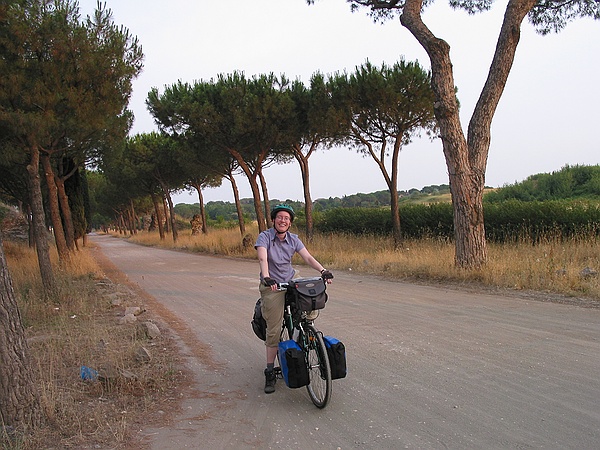
We are looking for Via Appia Antica, an older, thinner road on the map compared to the modern Via Appia. Perfect, I think - all the traffic will be on the new road and we’ll be able to ride comfortably on the old one. Still, I get a shock when we come to the intersection - that one-laned, potholed road is the one we want? Tall grass hovers over the tarmac from the sides. It looks like a badly maintained driveway. Nonetheless the road sign is pretty clear. Fabian checks on our GPS (thanks to friends from work!) and assures me this is the way to Rome. We bump down the road, dodging the odd car but otherwise it’s pretty quiet.
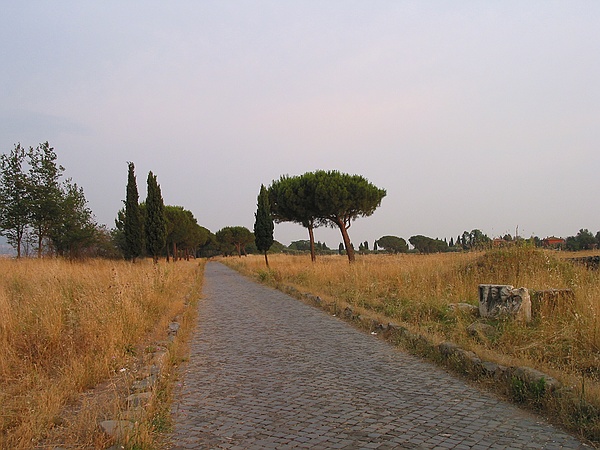
It soon becomes clear what the Italians mean by antica. It doesn’t just mean old, it means ancient! The straightness of the road gives it away, plus the potholes giving way to neat, square paving blocks - this is an old Roman road! And, indeed it is, as we discover from the archeological signs alon the way. Our guidebook even recommends strolls along the quiet road and contemplation of the scenery. We certainly enjoyed it - the road had little traffic, all around were fields and the occasional villa. The only sound was of bird song, and in the long afternoon light we could smell wood smoke. It was startlingly unreal after the bustle of the main road outside the airport.
It must be a wealthy part of Rome these days, as periodically we passed big gates, and a sign to Villa something or other. Inside the gates we could see lush gardens, in contrast to the dry, golden grass of outside. Sometimes we could even see a grand house set back under the trees.
The road was sometimes slow going. Most of it was one way, I think, not in our favour. This concerned me till I saw numerous joggers, cyclists, scooters and even a small car go the same way as us. I’d forgotten the Italian attitude to such foolish rules! Worse though was when the neat paving stones were replaced by big, lumpy blocks. I presume these are later replacements, as they were crap to cycle over and would have been the pits in a chariot. We also saw numerous signs mentioning “archeological sites”, and passed lots of statues, and monoliths whose purpose we could only guess. All the good stuff had been long since removed, but the atmosphere was one of centuries ago.
It was starting to get dark as we approached Rome proper, finally emerging into a busy street near Port Sebastian. Fabian with his GPS assured me we were still heading towards Rome! It wasn’t that long through the streets as the old road took us virtually to the centre - pretty cool, those old Romans! But the darkness decended quickly and I was very glad to finally see the outline of the hotel. And it was hot! What began as pleasant warmth out in the fields quickly became oppressive as we entered the narrow streets of the old city. Our hotel, despite costing 110 euros a night, did not come with air conditioning. We were ecstatic at making it, but needed a cold shower and a good dinner before it began to sink in. We’d made it.
What a day!
Wandering in Rome
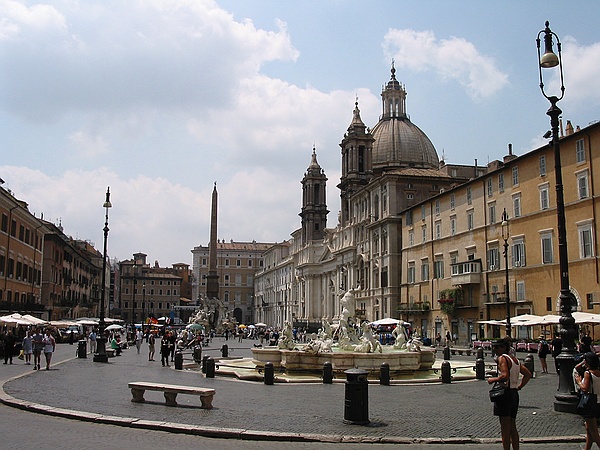
The next day we woke up late and breakfasted in the hotel. The Italians serve a breakfast similar to the French - bread and coffee. We headed out to Piazza Navona, an ancient stadium that is now one of the many squares in Rome. Walking in Rome was actually very pleasant, as numerous piazza are interconnected by narrow cobbled lanes. Occasionally you emerge out onto a big boulevard, but you quickly dive back into the back streets. These streets are full of life: small delicatessens, fashion shops, numerous bars and cafes. Lots of scooters! But few cars which is a joy in this traffic choked city.
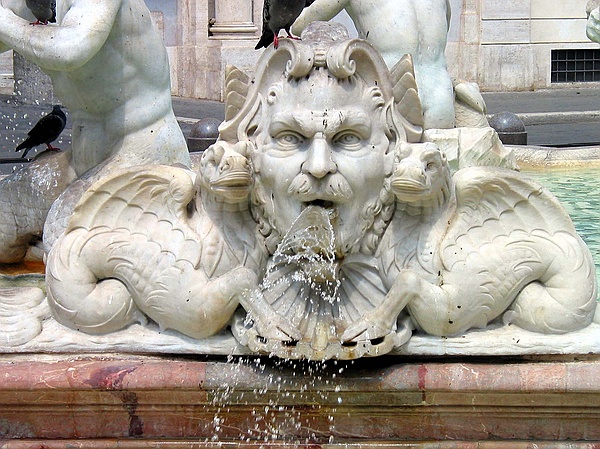
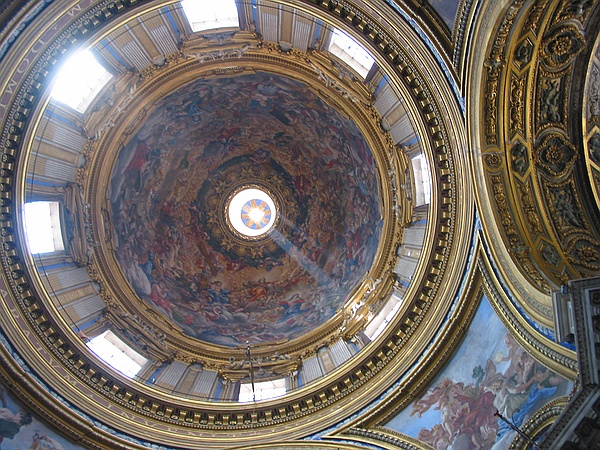
Our first Roman square is pretty cool. We enjoy the fountains and the beautiful church. As it is almost lunchtime there is a drowsy, hot feel to the day. I suspect most of the people are tourists, not Italians. Waiters make a desultory attempt to attract us to their restaurants, but everyone knows it’s a bit early yet. The hustlers around the fountain can’t detain us either.
There is a small tourist kiosk we stop in, grateful for the blast of air conditioning. But she is not able to help much in suggesting walks in Rome, saying that private companies are best able to help us (but she didn’t have brochures for them either). We decide to continue with just our guidebook. Our rough aim is the Pantheon, an ancient building, but we become distracted by lunch in a cafe.
It is so hot, it is wonderful to sit in the shade for about three hours. Fabian has grilled vegetables - a mix of freshly grilled capsicums (peppers), tomatoes, egplant, and fennel. The fennel is new to both of us, but very nice. Tastes of aniseed. I have a salad. We hang out here, just relaxing, waiting for the hottest part of the day to be over. We watch the other tourists. One German man is very interested in the football World Cup, visible in the bar across the street. He actually wanders over at one point but doesn’t want to buy anything so gets chased away by a waiter. Then he asks a couple eating lunch if he can sit at their table! They look nonplussed but actually say yes.
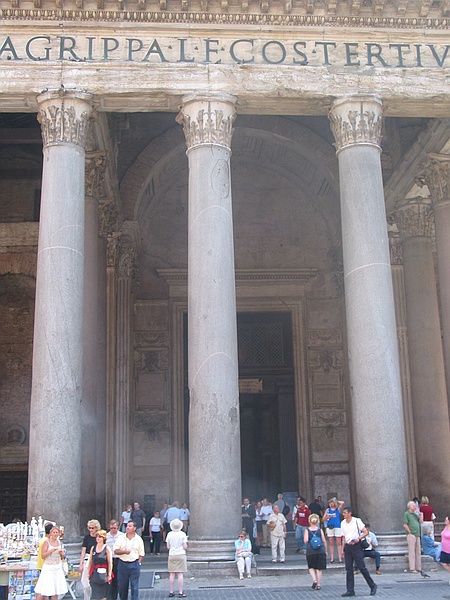
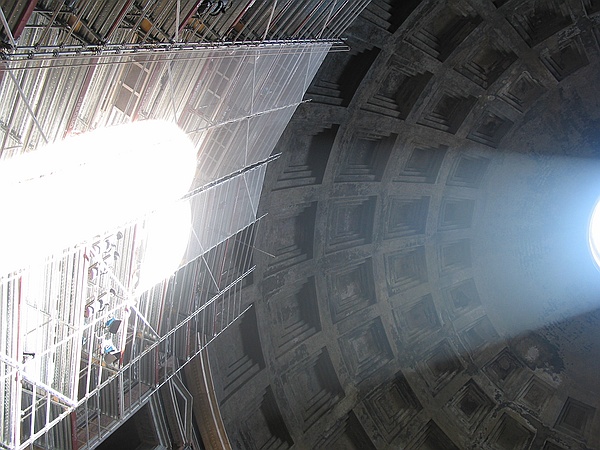
Eventually we get bored enough to move on into the sun. A short distance away the Pantheon looms up out of the streets. It is a bizarre feature of Rome that these ancient buildings are right in the centre of the current city. They have roads around them, scooters parked in their shade, and cafes in front of them. Rome continues, not entirely oblivious, but certainly with no awe of these usually enormous buildings!
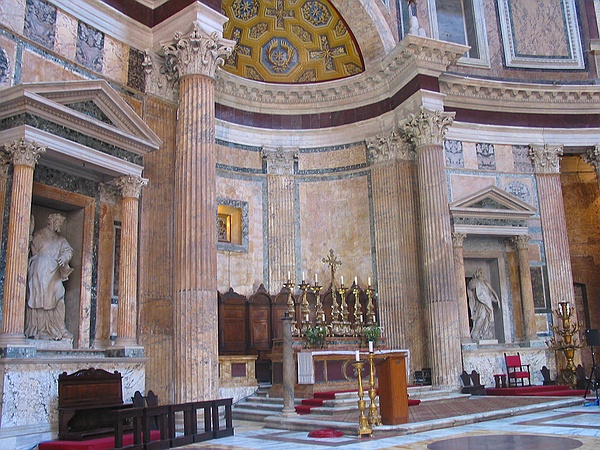
The Pantheon was apparently a temple in Roman times. It is a large circular building, with a big domed roof. To let light in, the top of the dome is uncovered. Yes, it rains in there. There is a sophisticated system of drains to take the water away. The result is a dark building, lit by a magnificent beam of light from the ceiling. It was consecrated as a Catholic church sometime early in the first millenium AD which helped preserve it’s life. The interior has the original marble floor, but the lower walls are now painted with modern (relatively) religious art.
It is a very impressive building. And very beautiful - simple, grand. No clutter. The resources and technology the Romans must have had impresses us a great deal.
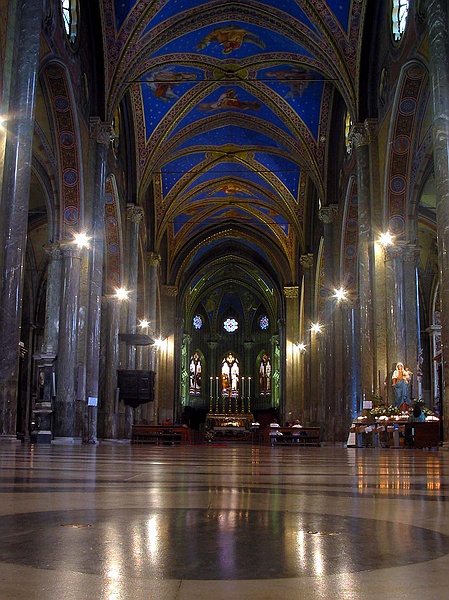
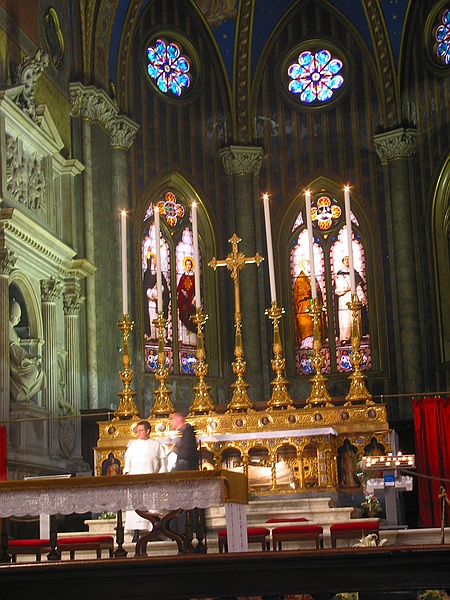
After numerous photos we wander over to Church of Santa Minerva, just across the way. A pretty old church, Gothic I think, but a real shock to move forward to the next civilisation. Inside the church there are magnificent paintings in the chapels, and also a documentary being shot! This causes some excellent lighting in the chapels as we watch the religious guys (fathers? bishops? cardinals?) walk back and forth looking serious.
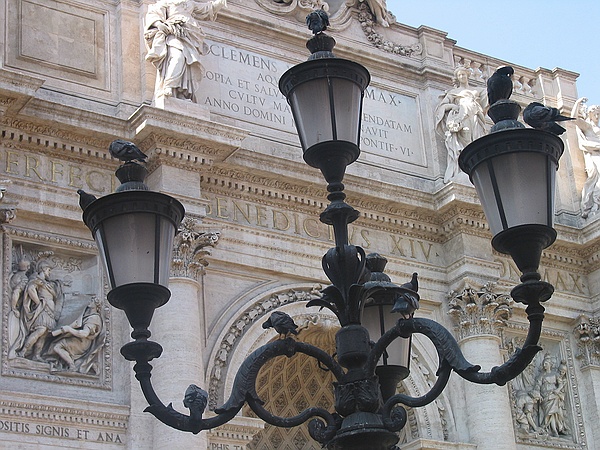
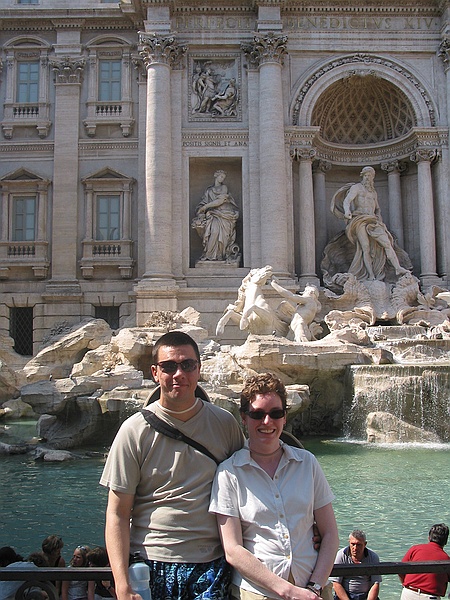
Then onto the Trevi fountain, a place our guidebook called kitsch but very enjoyable. It was right! We followed the signs for what seemed like a long time, before finally rounding a corner and seeing this enormous fountain attached to the back of a building. The surrounding area was absolutely full of tourists milling around. There were handbag sellers and rose sellers and sunglass sellers, plus gelateria, pizzeria galore. The fountain itself was full of ancient gods cavorting in the waters, basically. In front was a large basin of water surrounded by tiered seating. The water looked very inviting in the hot weather, but no-one went in! As in most of Rome, we were well away from any traffic, in our own litle piazza.
After taking the obligatory photos (and no we didn’t throw coins over our shoulder) we wander on to the Spanish steps. We eat some magnificent gelati on the way - I had some berry concoction with dried berries in it, absolutely divine. I dont’t know how they make it taste like the best, plumpest, sweetest fruit, only better. The creamy ones (like chocolate, vanilla, coffee etc) are good too, but for me the highlights are the fruit flavours. Melon, strawberry, blueberry, blackberry, etc, all intensely flavoured and incredibly good.
The Spanish steps (actually designed by a French architect) turn out to be very pleasant. I thought they might not look like much without the azaleas of spring, but they twist and turn on the way up and are quite visually appealing. The little piazza is full of people, all congregating at a small fish-shaped fountain at the bottom of the steps. To my surprise I see a man in a business suit take his water bottle to a tap on the fountain and fill it up! I knew Rome is dotted with fountains but it turns out that you can drink the water from the tap at most of them. Thanks to the Romans and their aqueducts? I’m not sure, but it was a godsend in the heat. The fountains moderated the heat, stone and dust of the city enormously.
Eventually we left this pleasant scene and headed back to the hotel for the customary cold shower. After a relax we headed out to dinner at a local pizzeria. The pizza was fine, but the best bit was the dessert where I got to try Sicilian cannoli. These are biscuity type things, rolled up when hot, and later filled with sweetened ricotta cheese. The ricotta was excellent, but the cannoli didn’t do much for me. I was expecting something like a brandy snap, chewy and crunchy at the same time, but it was instead crumbly.
After dinner we made a couple of circuits of our local piazza, Campo di Fiori. Literally it means Field of flowers, once its purpose perhaps but now it is a big paved piazza, surrounded by lovely old buildings, and absolutley buzzing at night. It has dozens of restaurants and bars, all full to the brim, and loads of younger people milling around, playing guitar on the fountain, drinking. We saw lots of young American kids, college kids they looked like, about 18, away from home and obviously having the time of their lives. I remembered what it was like being away from home for the first time! It made a nice change from the older tourists that dominate during the day, anyway.
St Peters and the Vatican
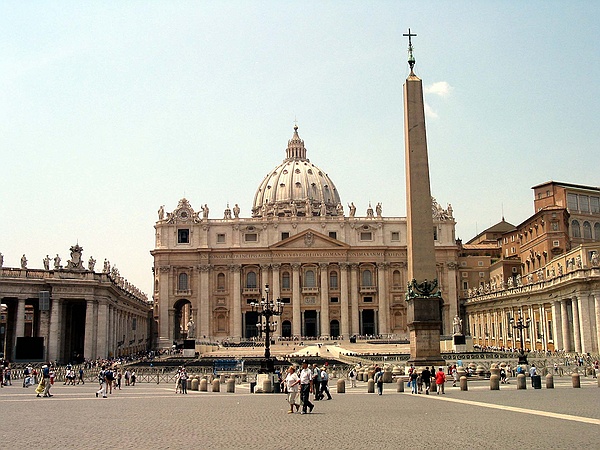
Thursday we decide we need to make some headway on the Vatican. We sleep late and bus out at almost midday. It is blazing hot as we arrive at St Peters, the worlds biggest church. The square in front is an excercise in gigantism, hundreds of metres across, a baking hot slab with two fountains and surrounded by columns. Ironically it reminds me of some of the communist architecture I have seen, which makes a point of trying to dwarf people as well. But right now it is not so much dwarfing as radiating. Despite the heat and glare, the square bustles with tour leaders holding up numbers, leading their little chickens around.
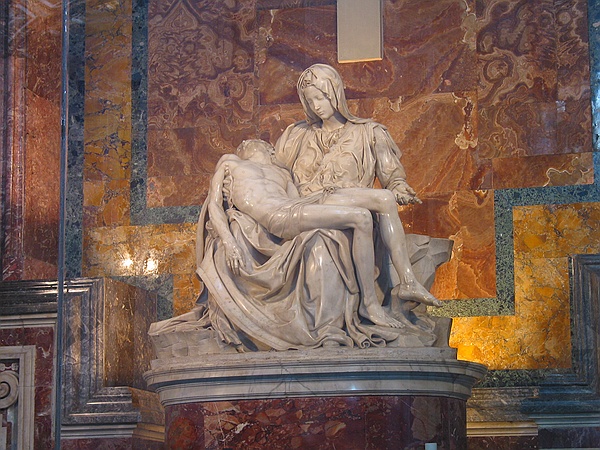
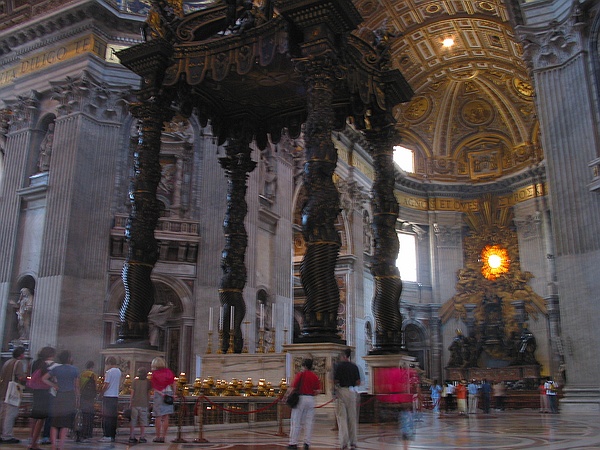
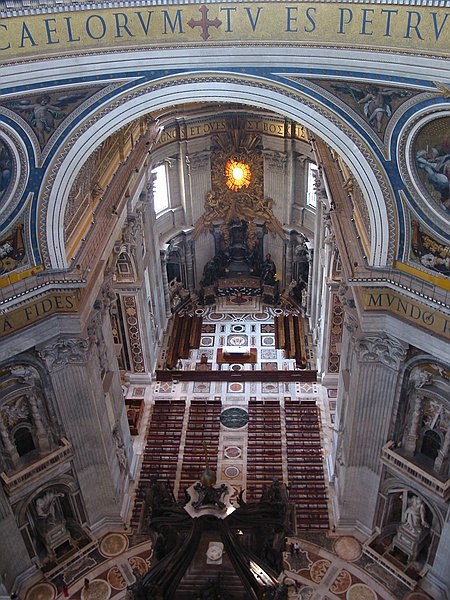
Fortunately the main sight is indoors. Entering St Peters the cool is a welcome relief. The church itself is cavernous, absolutely enormous. The purpose of it is to extoll the wealth and power of the Church, and this it achieves. However, as a church it is a bit unusual - there are no pews! The whole thing is full of tourists wandering around and taking flash photos. It is strangely irreligious. We spot the diamond in the rough though - Michelangelo’ Pieta over on the right. It is a statue of Mary holding her son Jesus - an enormous seated Mary, holding Jesus as a grown man, who stretches across the folds of her dress. The look on her face as she looks at her dead son (the name means Pity) is agony. One of the world’s best scuptures - and one I have studied in art classes - it is sublime to see it in the flesh.
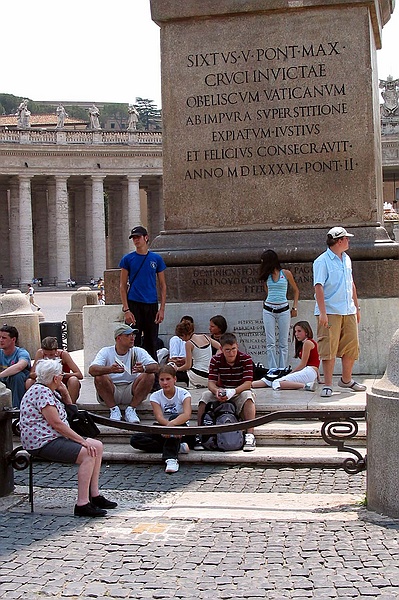
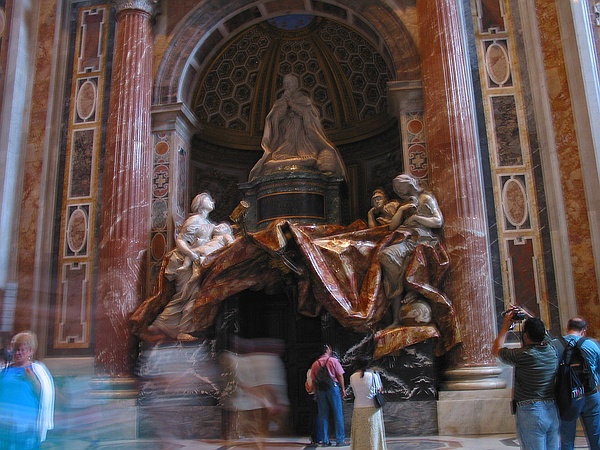
It turns out to be the most moving thing in the whole church. We spend maybe an hour in there, wandering around. Most of the rest of the art is not so noteworthy, and the tour groups and flashes make it seem like a circus. A strange building. I think the Pope does hold certain ceremonies there but I could certainly understand if modern day Popes look at these enormous edifices with horror - aghast at the lives and money that must have gone into building it. In no way is this church a part of a community, or connected to anything. It is like a vast museum, a honey pot for daft tourists - like us - who are not even part of the faithful but come anyway. We do climb the tower though - the cupola - and the views are outstanding. Maybe the magnificence meant something to somebody once!
Colossal Colossus
We finally leave for a late lunch at a trattoria. Thinking it would be cheaper, we were a bit surprised to clock up 40 euros. Rome is not cheap. With raised eyebrows we decide to go to the Colosseum. This is on the other side of Rome, but we don’t have enough time to see the Vatican Museums today (where the Sistine Chapel is, among other treasures) as it closes at 3pm. So we catch a tram to the Colosseum. Good in theory, but in practice it took about an hour, and was meltingly hot. We emerged from the tram, finally, just about in liquid form. But, I have to say the Colosseum made up for it.
Is it a cliche to say it was enormous? It was! How did they build the thing! It looms over the road, which runs right around it of course in the modern Roman way. It was originally a stadium, with seating, about a third of a mile in diameter. Now some of the upper terraces have eroded away, as have most of the seats, but it is still gigantic. Once again I am blown away by the technology and labour the Romans had at their disposal. According to our guide book, all modern stadiums follow the design of multiple entrances, and stairways near your seats.
It took ages to walk around the thing to find the entrance. Finally we did and walked inside. It was awesome. There’s been quite a bit of restoration, too, and generally quite well done I think. The original stones have sometimes fallen, but many areas have been reconstructed with brick. This means it doesn’t look identical to how it used to, but also means you can feel the effects of the actual building, and also understand how much had disappeared.
It took a while for me to realise exactly where the seating went. Apparently most of the horizontal surfaces have completly eroded, leaving just the verticals. You have to use your imagination to connect the verticals into sloping platforms with seats on them. But once you do, it clicks into place, and your jaw drops at the number of people that they could fit in here. I don’t think it was a very nice place, to be honest. It was about the time of Nero, and the populace’s thirst for blood was fairly high. I don’t think there was much of the cliched “throwing Christians to the lions” thing but certainly there was human-human combat and human-animal combat. Part of the floor is missing and you can see the tunnels and cages that they kept the animals and slaves in. I closed my eyes and tried to imagine the roar of the crowd as yet another event started…
We trekked back to our hotel and had a lovely dinner at Grappolo d’Oro, still chatting about the Colosseum. And its similarity to St Peters! Both enormous edifices, both testaments to the ruler’s power. I felt like I was really enjoying Rome. All around us in the restaurant were tourists - Americans, Norweigans, us. As usual we did our circuit of Campo de Fiori, and the buzz of the nightlife makes up for the hot hotel room.
The Vatican again
The next morning we are up early to make a second attempt at the Vatican, this time to see the museums. The tiny state within a state has an amazing collection of artwork, some of portable like statues but much of it in the rooms of the papal palaces themselves, as artists were engaged to decorate state apartments. And the artists were all the usual grandees - Rapael, Michelangelo, and hundreds of others.
The museum has a very modern entranceway (the guidebook calls it “un-Italian” :-) and we are soon shuffling through room after room after room. The statues room, the map room. Secretly everyone is heading for the same place - the Sistine Chapel. But you can’t go straight there, you have to follow the single route throught the museum. We see some fantastic paintings once we get to the personal apartments of the popes. At one time they must have been full of magnificent furniture as well, but now just the paintings remain. I can’t remember them all now but occasionaly we would catch the words of a tour guide, explaining the biblical story that was behind a painting.

Finally we arrive at the Capella Sistina itself. Unlike the intimate, personal appartments, it has perfect church proportions - big and barnlike. Surprisingly not everyone is looking at the roof. Lots of people are in fact looking a bit tired, groups are huddled on the stone seats at the side. But wow, what a place.
The high walls are covered with frescoes, in an older style, fairly prosaic, but still nice. The roof seems to glide above my head, Michelangelo’s effortless paintings such a contrast in styles. The human form takes pride of place, with muscles, limbs going everywhere. Whether clothed or not the human form is clearly of prime importance for the sculptor, and it makes the figures in the frescos below look sticklike and lifeless. The use of human figures emphasises the story of the Christian religion as a human experience - not an animal or plant or even the rest of the universe but just ourselves.

The Last Judgement was his final contribution to the chapel, many years later. It occupies the entire front wall, and contrasts with the ceiling again, mainly because the blues of the skies are different. The ceiling has puffy clouds and a baby blue sky, suiting the theme of birth. The Last Judgement has a strong blue, a clear, definite blue, mirroring the utter clarity of the last judgement where no sins can be hidden before God. In the fresco I can see the righteous being raised up to heaven in the arms of the saints, and the damned being thrown to hell, inhabited by awful creatures. Again human forms, stretching and straining to reach salvation, or held up in shrieks of horror, are paramount in the picture.
Both of Michelangelo’s paintings are very, very good, and I’m pleased we made the trek to see them. I only wish I had more time to spend in the rest of the museum, but three days is three days.

We decide to spend the rest of the day relaxing. For dinner we head back to the Trevi fountain and eat pizza in the buzz of people. A bride and groom come down to the fountain for photos, and the crowd good naturedly cheers them on. It is an amiable evening for an amiable city. We both like Rome a lot. It costs a lot, and is full of tourists, but is one of the best-natured and enjoyable capitals I have visited in a long time.